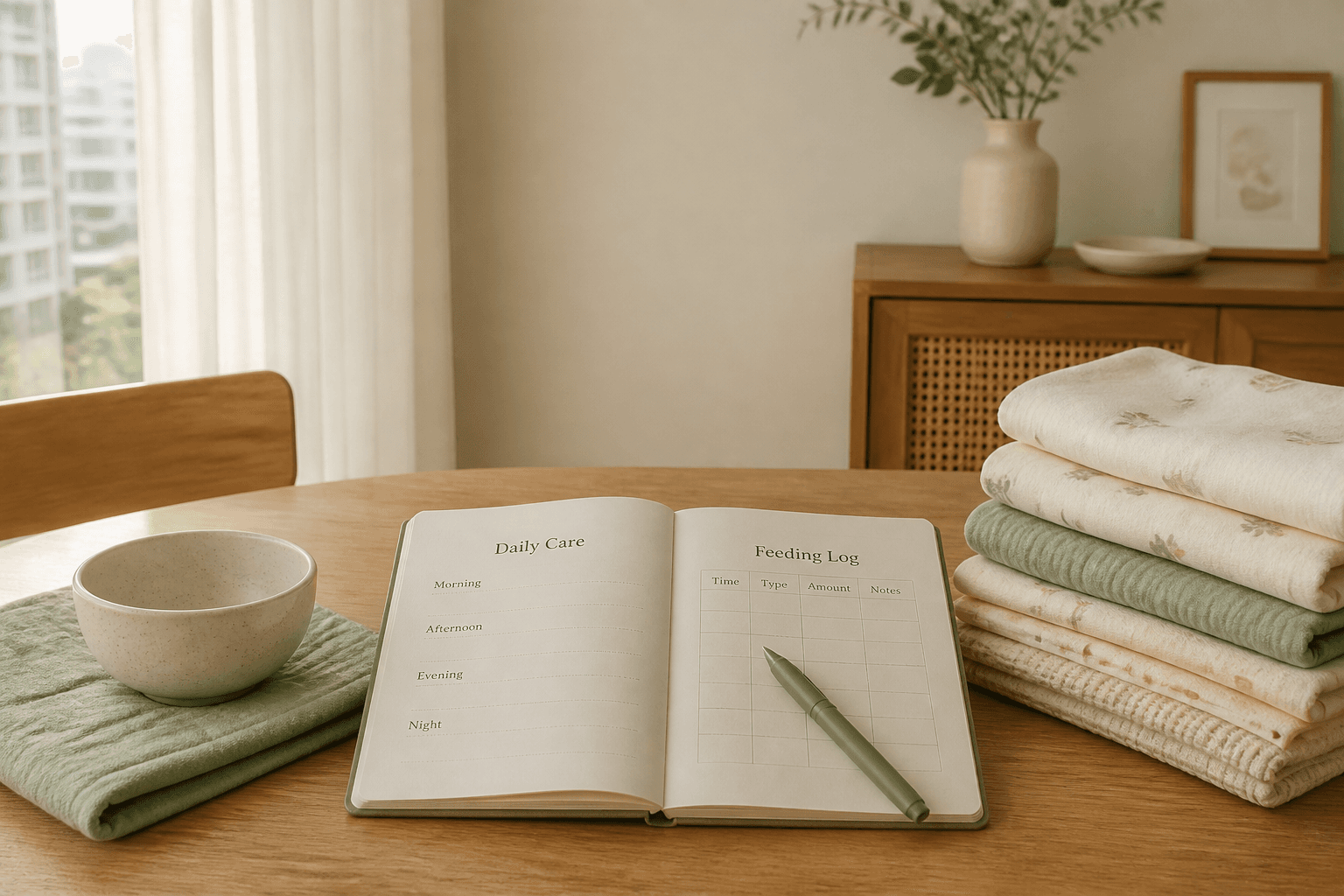
Document the confinement month from the first day, not only when something goes wrong. Keep a simple record of meals, feeds, rest, expenses, agreed changes, and permit-related dates. The point is clarity, not suspicion.
This matters most when care happens inside the home. Everyone is tired. Advice comes from grandparents, WhatsApp groups, and previous births. A written record gives the family and nanny one shared version of what was agreed.
Start With The Agreement
The first document is the agreement itself.
Before the nanny arrives, keep one copy of the agreed dates, address, care scope, fees, payment timing, rest expectations, house rules, and cancellation terms. If you hire directly, this record becomes more important because there is no agency package sitting between the family and nanny.
You do not need a complicated document. You need one version that both sides can read. If the arrangement was discussed across many WhatsApp messages, summarise it into one note and ask both sides to acknowledge it.
If you have not written this yet, start with the direct agreement checklist. It covers the terms that tend to cause confusion later: night care, meals for other family members, extension rates, cancellation, and replacement expectations.
Keep the agreement somewhere easy to find. A PDF in a chat, a printed copy in the kitchen drawer, or a shared note is better than a memory.
Record The Daily Care Rhythm
The daily record should be short. If it takes too long, nobody will keep doing it.
For baby care, record the basics:
- feed times and rough amounts, if bottle-fed
- direct latch sessions, if the mother wants to track them
- diaper changes
- bath timing
- long unsettled periods
- night wake-ups
- any instruction from the parents that changes the usual routine
For mother care, record meals, drinks, rest windows, and any agreed recovery support. Keep this practical. Do not turn the log into a medical chart.
For night care, write what actually happened. A phrase like "night care included" can mean different things. Did the nanny handle every wake-up? Did the mother latch while the nanny changed and settled the baby? Did the father take one shift? The record helps everyone see the real rhythm instead of arguing over impressions.
This is especially useful for second-time families. With a toddler at home, nights and mornings often become less predictable. A daily note makes it easier to adjust without blaming anyone.
Track Meals And Household Scope
Food is one of the most common sources of quiet friction.
Record what was cooked and for whom. If the nanny is expected to cook only for the mother, write that. If the partner, toddler, grandparents, or helper are included, write that too.
When the scope changes, record the change. For example, if the nanny starts cooking toddler lunch during week two, note whether this is temporary, included, or charged separately. If a grandmother requests a different soup or a stricter confinement menu, note who approved the change.
This is not about making the home rigid. It prevents small additions from becoming invisible work.
Ingredient costs should also be recorded. Keep receipts or note reimbursements in one place. If the family buys ingredients, the nanny should know what she can use. If the nanny buys ingredients, the family should know how reimbursement works.
Write Down Changes As They Happen
Most confinement arrangements change during the month. That is normal.
The baby may feed differently from expected. The mother may need more rest. Grandparents may visit more often. The nanny may find the kitchen setup different from what she expected. The family may realise they need more help at night and less help in the afternoon.
When something changes, write three things:
- what changed
- when it starts
- whether money, rest, or scope changes with it
For example: "From 8 September, nanny will also cook simple toddler dinner on weekdays. Family provides ingredients. No change to fee." Or: "From tonight, father handles the 11pm bottle; nanny resumes after 2am."
These notes do not need formal signatures each time. A clear WhatsApp confirmation can be enough for practical purposes. The important part is that both sides can find it later.
Keep Permit And Date Records Together
If your confinement nanny is Malaysian and working in Singapore, keep the Work Permit and stay dates in the same folder as the care agreement.
MOM's key facts page says the Work Permit for a confinement nanny is for Malaysians employed as confinement nannies in Singapore. MOM states that the permit can last up to 16 weeks from the birth of the child and is not renewable.
MOM's application page says the employer or appointed employment agency can apply, and that families can apply from 4 weeks before the expected delivery date up to 16 weeks after the child's birth. It also says families must inform MOM of the nanny's start date before she can work.
Keep these items together:
- expected delivery date
- actual date of birth
- Work Permit approval or letter
- nanny's agreed start date
- nanny's actual start date
- nanny's visit pass expiry date
- agreed end date
- any extension of stay record
- cancellation acknowledgement when employment ends
If the nanny leaves early, the record matters. MOM's cancellation page says the Work Permit must be cancelled if the nanny no longer works for the family. If she has left Singapore permanently, cancellation must be done within 1 week from her departure date, unless the pass has expired.
For more detail on timing, read the guide on extending versus renewing a confinement nanny Work Permit.
Document Concerns While They Are Small
Do not wait until the relationship is tense.
If something feels off, write it down in neutral language. "Baby was unsettled after midnight and family asked to change settling method" is more useful than "nanny did not listen." "Family asked that baby photos not be shared outside the family chat" is clearer than "privacy issue."
Use the record to solve the next day, not to build a case. Most problems are expectation problems: cooking scope, night care, phone use, visitor rules, toddler involvement, or different views between mother and mother-in-law.
If the same concern repeats, the record helps you speak calmly. You can point to the pattern and ask for a specific change. If the arrangement still does not work, the record helps you decide whether to repair, replace, or end the arrangement.
The guides on what to do when your confinement nanny is not working out and how replacement works in Singapore are easier to use when you already have dates and examples.
Keep The Format Simple
Use whichever format the family and nanny will actually maintain.
A notebook on the dining table works. A shared spreadsheet works. A WhatsApp daily summary works. A care journal works if it is part of the household habit.
The format should answer four questions:
- what happened today
- what changed today
- what was agreed today
- what needs follow-up tomorrow
Do not overbuild it. A record that takes 3 minutes every evening is better than a perfect template nobody updates after day three.
How BulanBloom Thinks About This
BulanBloom sees documentation as part of not feeling trapped. The goal is not to turn confinement care into paperwork. The goal is to make expectations visible before they become conflict.
BulanBloom is a platform, not an employment agency. Families and nannies contract directly with each other, and BulanBloom is not a party to that agreement. This article is general information for Singapore families, not legal advice.
Common questions
What should I document during the confinement month?
Document the agreed care scope, meals, feeds, diaper changes, sleep and night-care pattern, expenses, date changes, house-rule changes, and any concern raised by either side. The record does not need to be complicated; it needs to be consistent and easy to find.
Is documenting the confinement month the same as monitoring the nanny?
No. A simple daily record is not about catching mistakes. It helps the family and nanny stay aligned when everyone is tired, and it gives both sides a shared reference if expectations change during the month.
Should Work Permit dates be included in the confinement record?
Yes. If you hire a Malaysian confinement nanny in Singapore, keep the Work Permit approval, start date, visit pass expiry, agreed work period, and cancellation date in one place. MOM says the permit can last up to 16 weeks from the child's birth and must be cancelled when the nanny no longer works for the family.
What is the easiest format for a confinement nanny daily log?
Use the format both sides will actually maintain: a notebook, shared spreadsheet, notes app, or care journal. The best record is short enough to update daily and clear enough to answer what happened, what changed, and what was agreed.
Find care matched to your household.
A four-minute private quiz organises your recovery, feeding and household preferences so we can compare suitable profiles.
Start the quiz